How Long Does a Residential Epoxy Floor Last?
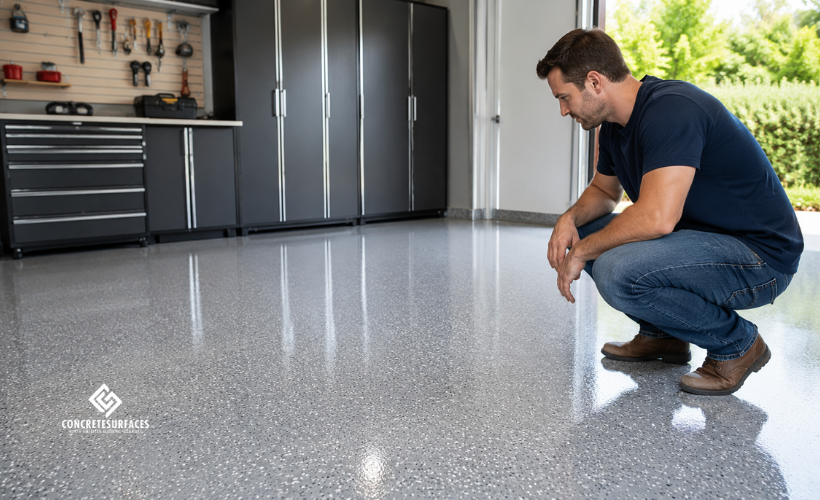
How Long Does an Epoxy Floor Last is the first question many homeowners ask before they add an epoxy floor coating. A residential epoxy floor lasts 10 to 20 years. A professional install can push it past 20 years with basic care. Three factors that influence that number stand out: concrete prep, coating quality, and daily maintenance. American Concrete Surfaces installs high-performance floors across central and eastern Ohio. This guide explains epoxy floor durability and how to protect your investment.
How Long Does a Residential Epoxy Floor Last?
A residential epoxy floor typically lasts 10 to 20 years. The average lifespan of epoxy depends on the installer, the concrete, and the traffic. The materials used and the surface prep decide where your floor lands in that range. Garage floors are the most common residential use, and the same rules set how long they last.
Lifespan changes by coating system:
- Professional epoxy with a polyaspartic or polyurethane topcoat: 20 years or more
- Professional 100% solids epoxy: 15 to 25 years
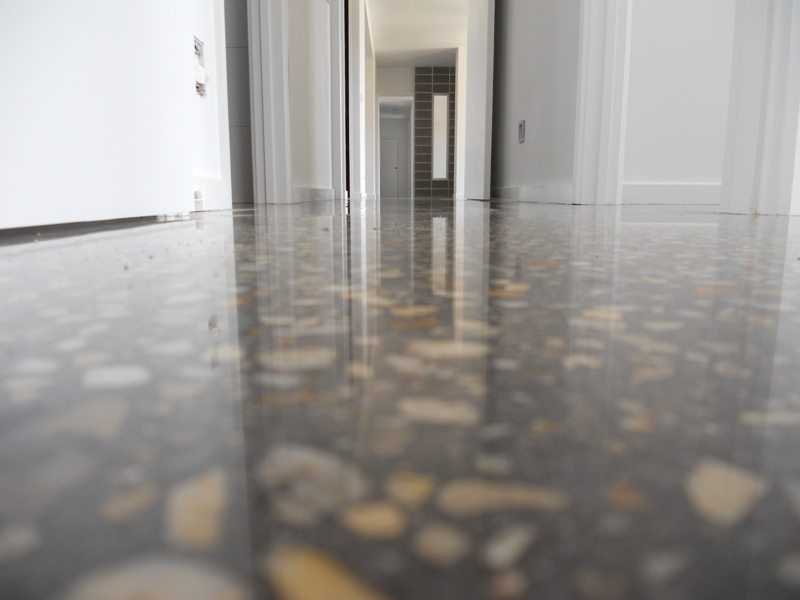
- Polished concrete: 15 to 20 years with resealing
- DIY epoxy kit: 1 to 5 years
Two things create the gap between a three-year floor and a twenty-year floor: the installer and the prep. A professional coating lasts because the epoxy system bonds deep into a ground slab. A hardware store kit sits thin on bare concrete and peels fast. A garage floor coating from a pro can hold for two decades, while an epoxy garage floor from a kit often fails early. The coating is only as strong as the prep beneath it.
What Determines How Long Your Epoxy Floor Lasts
Several key factors set a floor’s real lifespan. Each one adds years or takes them away. Professional installation controls the ones that matter most, and American Concrete Surfaces builds every job around them.
Concrete Surface Preparation
Proper surface preparation is the single biggest factor in epoxy floor durability. The concrete needs a profile before any coating goes down. American Concrete Surfaces grinds the slab with diamond tools, then runs moisture testing before the first coat. This opens the concrete pores, so the epoxy bonds into the surface instead of on top of it. Without prep, epoxy fails within months, no matter how good the coating. A clean, ground, dry slab is the base of a floor that lasts two decades.
Coating Quality and Materials
The coating system decides how a floor handles wear. Thin water-based products stay soft and chip under normal use. Professional 100% solids epoxy builds a thick, hard, abrasion-resistant shell. That shell grips prepared concrete and resists impact and chemicals. American Concrete Surfaces installs epoxy flooring systems in epoxy, polyaspartic, polyurea, urethane, and MMA. The crew matches the product to the room, the traffic, and the budget.
Topcoat and UV Exposure
A topcoat shields the epoxy base and adds years. UV light yellows bare epoxy over time. A sunlit garage or a room with large windows needs a finish with UV stability. Quality topcoats add UV resistance, abrasion resistance, and chemical resistance in one layer. Exterior applications need this protection most, since the sun hits them all day. These topcoats are the main reason a professional floor outlasts a plain epoxy coat.
Traffic and Daily Use
Traffic level shapes how fast a surface wears. A residential garage sees far less stress than an automotive shop or a busy workshop. In residential settings, floors age slowly. In industrial settings, high-traffic industrial floors take a beating, so industrial epoxy gets a thicker build. Dropped tools, dragged furniture, and hot tires test the bond every day. Hot tire lift pulls up epoxy that was rushed or poorly cured. Proper curing time prevents it.
How to Make Your Epoxy Floor Last Longer
A residential epoxy floor is low maintenance, but a few habits extend the life of your epoxy floor. Follow these steps to protect the finish:
- Sweep or dust mop often to clear grit that scratches the coating.
- Wipe up oil, gas, road salt, and chemical spills fast.
- Clean with mild soap and water, not abrasive or acidic cleaners.
- Place protective mats under heavy tools and vehicle tires.
- Let car tires cool before you park to prevent hot tire lift.
- Schedule recoating every 7 to 10 years in high-traffic rooms.
These steps add years to an epoxy’s lifespan and keep the surface looking new. Ohio winters add one task. Road salt and snowmelt track in on tires and shoes. A quick rinse after heavy salt clears the residue before it wears the finish.
Epoxy vs Other Concrete Coatings
Epoxy is a strong residential choice, and other flooring options fit specific goals. Polyaspartic coatings cure in hours and resist UV damage, so they suit sunny spaces. Polyurea coatings flex under impact and handle heavy use. Polished concrete has no coating to peel and lasts 15 to 20 years with resealing. Every option adds aesthetic appeal with color and finish choices. American Concrete Surfaces reviews each space and helps the homeowner pick the right system.
Signs Your Floor Needs a Recoat
Even a durable floor shows age after years of use. Watch for these signs:
- Peeling or bubbling near edges and seams
- Yellowing or fading from sun exposure
- Dull spots or scratches along walk paths
- Hot tire marks that lift the coating
Minor wear often needs only a fresh topcoat. Widespread peeling or delamination calls for a full replacement. A quick inspection tells you whether to replace or recoat, and early action protects the floor’s life. Regular checks catch small problems before they spread.
Does a Professional Epoxy Floor Cost More Up Front?
Yes, a professionally installed floor costs more than a kit at the start. It saves money over its life. A DIY kit runs a few hundred dollars and often fails in a few years. A professional system lasts 15 to 25 years, so the cost per year drops well below the kit. The installation process takes a few days, and the result lasts decades. Many buyers ask how long do epoxy garage floors last before they compare prices. The answer favors the pro. American Concrete Surfaces treats each floor as a long-term investment, not a quick fix.
Common Questions About Epoxy Floor Lifespan
How can you improve epoxy floor longevity?
You improve it with three steps: proper prep, a UV-stable topcoat, and light traffic. A professional installer handles all three. These steps stretch the epoxy lifespan by years. American Concrete Surfaces builds each floor for its space and its workload.
How long does epoxy flooring last in a basement?
Epoxy flooring lasts 15 to 20 years in a dry, sealed basement. The lifespan of epoxy flooring depends on the space. In a basement, the lifespan of an epoxy floor runs long, because it sees light traffic and no direct sun. The crew tests for moisture first, since a damp slab needs a vapor barrier.
Is upgrading your garage floor worth the cost?
Yes, it adds durability and value. A professional epoxy garage floor is designed to last for decades and resist stains, salt, and hot tires. A high-traffic space may need recoating every 5 to 10 years, but a home garage often goes longer.
Get a Floor Built to Last Across Ohio
A professional install saves you from replacing the floor every few years. American Concrete Surfaces brings 25 years of experience and working owners to every job. The team installs epoxy, polyaspartic, and polished concrete floors for homes and businesses. American Concrete Surfaces serves:
- Cambridge, Ohio
- Zanesville and Newark
- New Philadelphia and Dover
- Coshocton and surrounding communities
The answer to How Long Does an Epoxy Floor Last comes down to the quality of the install and the care that follows.

Contact American Concrete Surfaces today for a free design consultation and a residential floor built to last for decades.
The post How Long Does a Residential Epoxy Floor Last? appeared first on American Concrete Surfaces.
from American Concrete Surfaces https://americanconcretesurfaces.com/how-long-does-a-residential-epoxy-floor-last/
via American Concrete Surfaces


Comments
Post a Comment